
Business
Missed or Just Met the October 15 Tax Deadline? What to Do Next
What to do after the October 15, 2026 extended deadline: confirm acceptance, reconcile payments, limit penalties if you filed late, and how California rules differ.
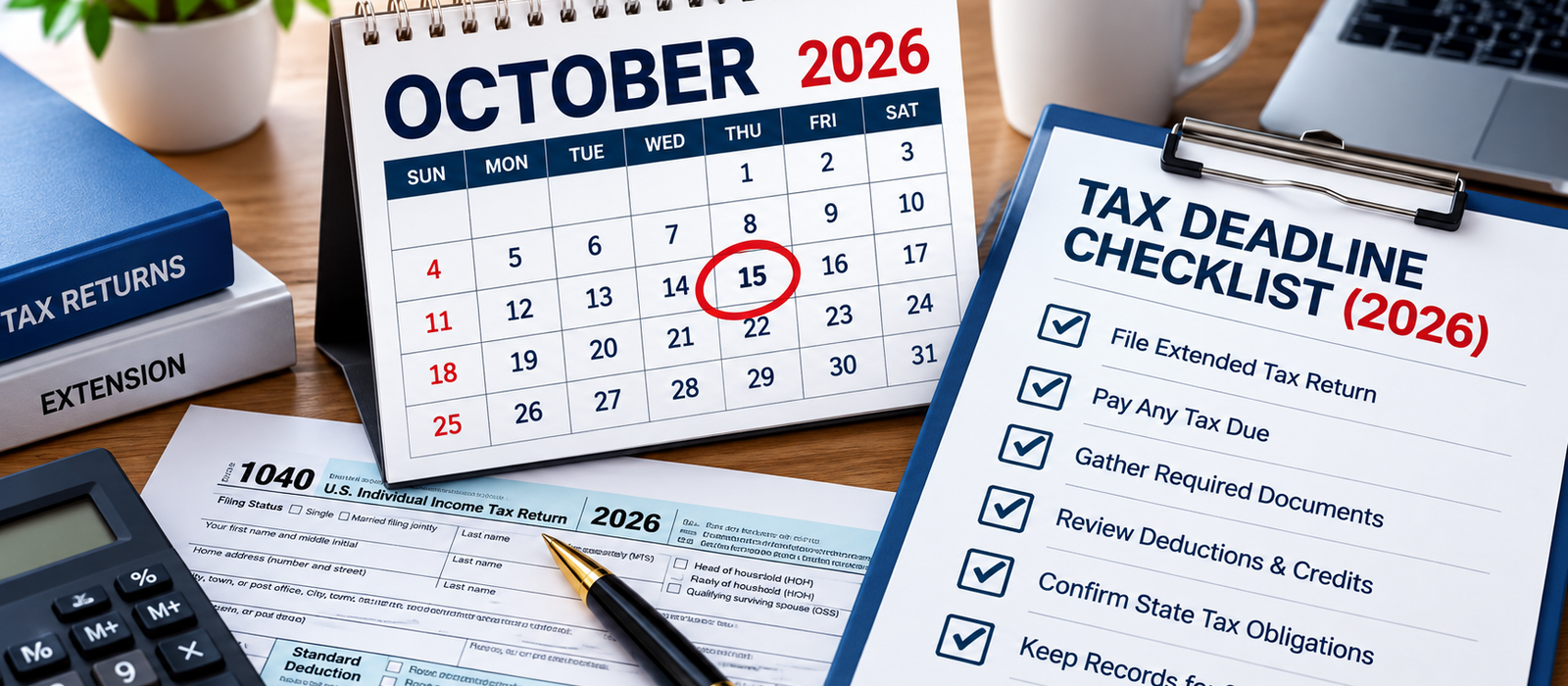
Thursday, October 15, 2026 was the last day for most individuals who extended their 2025 federal return with Form 4868, and for calendar-year C corporations that filed Form 7004. If you filed on time, there are still a few loose ends to tie up. If you missed it, the damage grows each month, so the sooner you act the better. This guide covers both situations, including the California rules that differ from the federal ones.
First, confirm which deadline applied to you
| Return | Extension length | Extended due date for calendar-year filers |
|---|---|---|
| Individuals (Form 1040 with Form 4868) | 6 months | October 15, 2026 |
| C corporations (Form 1120 with Form 7004) | 6 months | October 15, 2026 |
| Partnerships (Form 1065) and S corporations (Form 1120-S) | 6 months | September 15, 2026 |
| Trusts and estates (Form 1041) | 5 and a half months | September 30, 2026 |
Fiscal-year businesses have their own dates, and disaster relief can push deadlines later for people in affected areas, so check the IRS tax relief page for your county. Partnerships and S corporations were due a month earlier, which is often why owners were still waiting on K-1s in October.
The extension never covered payment
An extension gives more time to file, not more time to pay. Tax on 2025 returns was generally due April 15, 2026, and interest has run on any unpaid amount since then. On top of interest:
- The failure-to-pay penalty is 0.5% of the unpaid tax for each month or part of a month, up to 25%. It falls to 0.25% per month while an approved payment plan is in place, if the return was filed on time.
- Form 4868 describes an exception: if you requested the extension on time, paid at least 90% of your total tax by April 15 and pay the rest with the return by the extended date, the late-payment penalty may not apply.
- Underpayment penalties for estimated tax are calculated separately under the safe harbor rules.
The federal underpayment interest rate is 7% a year for the quarter beginning October 1, 2026, compounded daily. You can pay through IRS Direct Pay and the other options on IRS.gov.
If you filed by October 15
- Check that the return was accepted. An e-file submission is not the same as acceptance. Save the acceptance message, and refile promptly if it was rejected.
- Match every payment. List federal and California estimates, extension payments, overpayments carried forward and withholding, and confirm each was applied to the right taxpayer and year. Misapplied payments cause many notices.
- Watch for corrected forms. A corrected 1099 or late K-1 arriving after filing may or may not change your tax. Ask your preparer whether an amended return is needed before filing one.
- Pay any balance now. Interest and penalties keep growing until it is paid.
- Keep a filing folder. Store the final return, acceptance confirmation and payment records together.
If you missed October 15
Filing late and paying late are separate problems with separate charges.
| Charge | What triggers it | How it works |
|---|---|---|
| Failure to file | Return filed after the extended due date | 5% of unpaid tax per month or part of a month, up to 25%, reduced by the failure-to-pay amount in months when both apply. For returns due after December 31, 2025 and filed more than 60 days late, the minimum is the lesser of $525 or 100% of the tax due. |
| Failure to pay | Tax still unpaid after April 15 | 0.5% per month, up to 25% |
| Interest | Any tax unpaid after April 15 | 7% annual rate for the current quarter, compounded daily |
Because the failure-to-file penalty is ten times the failure-to-pay rate, file as soon as possible even if you cannot pay in full. Partnerships and S corporations have their own late-filing penalty based on the number of owners, so do not apply the individual rules to them. Penalty relief for reasonable cause may be available, but it depends on your facts.
Can’t pay the full balance?
- Work out the balance, using your best estimate if needed.
- Pay what you can right away.
- File the return.
- Review IRS payment plan options, and California options separately.
- Keep confirmations of every payment and request.
A payment plan does not remove interest, but it lowers the failure-to-pay rate and helps you avoid enforced collection.
How California handles extensions
California extends the individual filing deadline to October 15 automatically, with no form required. Payment was still due April 15, 2026. Form FTB 3519 is only for people who could not file by April 15, owed tax and paid by mail; electronic payments need no form.
Business extensions are longer in California than federally. The FTB describes 7 months for Form 100 corporations, 6 months for Form 100S and 7 months for partnerships and LLCs, so a California C corporation may still have time after October 15. Check the FTB due date pages for your entity. California’s late payment penalty is generally 5% of the unpaid tax plus 0.5% per month, and the late filing penalty is 5% per month up to 25%.
A notice arrived. Now what?
- Read the tax year and notice number.
- Compare it with your return and payment records.
- Check whether every payment was credited.
- Identify the issue: a math correction, missing information, a balance due or a proposed change.
- Respond before the stated deadline and keep proof.
A notice does not prove the return was wrong. Gather your documents before you call.
Documents that commonly hold up late returns
| Document | Who needs it | Where it comes from |
|---|---|---|
| K-1s | Partners, S corporation shareholders, trust beneficiaries | The entity or trust |
| Corrected 1099s and brokerage statements | Investors and anyone receiving revised forms | Brokers, banks, payers |
| Estimated and extension payment records | Anyone who made payments | IRS, FTB and bank records |
| Business profit and loss and balance sheet | Business owners | Your accounting system or bookkeeper |
| Payroll and 1099 filings | Employers and businesses paying contractors | Payroll provider |
| Retirement, HSA and charitable records | Taxpayers claiming those items | Plan administrators and charities |
| Foreign account details | Anyone with international activity | Banks and advisers |
Mistakes to avoid when filing late
- Assuming the extension covered payment.
- Leaving out estimated payments, which overstates the balance.
- Filing with an outdated K-1 or ignoring a corrected 1099.
- Forgetting California or other state balances.
- Missing separate foreign reporting forms.
- Treating a submitted e-file as an accepted one.
- Ignoring a notice until the response window closes.
Make next year easier
Most October scrambles start with books that were not reconciled during the year. Monthly bookkeeping and quarterly tax planning mean the numbers are ready in spring, estimates are right and fewer returns need extending at all.
How CPA Torrance can help
Our tax filing and compliance team helps clients file late returns, reconcile payments, respond to IRS and FTB notices and set up payment plans. Businesses that want ongoing oversight can add fractional CFO support. Capacity depends on timing, so book a 15-minute call as early as you can.
Frequently asked questions
Was October 15, 2026 the extended deadline for everyone?
No. It applied to most individuals who filed Form 4868 and calendar-year C corporations that filed Form 7004. Partnerships and S corporations were due September 15, trusts September 30, and disaster areas may have later dates.
Did my extension give me more time to pay?
No. Tax was generally due April 15, 2026, and interest has accrued on unpaid tax since then.
What is the penalty for filing after October 15?
Generally 5% of unpaid tax per month up to 25%, with a minimum of $525 or 100% of the tax due, whichever is less, once a return is more than 60 days late.
Should I file late even if I cannot pay?
Yes, in most cases. The late filing penalty is much larger than the late payment penalty, so filing quickly limits the cost.
Does California follow the October 15 date?
For individuals, yes, automatically. California business extensions vary by entity, and some run past October 15.

This article is general information, not tax advice for your situation. Deadlines and rules can change; confirm with a tax professional before acting.