
Sales tax nexus management across 20 to 45 states
We map economic and physical nexus, register where required, and separate marketplace-facilitator sales from the direct sales you must collect on yourself.
E-commerce accounting & CFO advisory
For Amazon FBA sellers, Shopify brands and multi-channel DTC companies that have outgrown basic bookkeeping, and can no longer say with confidence which products actually make money.
Based in Torrance, CA. Supporting e-commerce brands in California, Texas, Florida, New York and nationwide.
In short
An e-commerce accountant reconciles marketplace and payment payouts, Amazon, Shopify, PayPal and Stripe, against bank deposits, ties inventory and COGS to real sales, manages sales tax nexus across states and reports margin by SKU and channel. CPA Torrance runs all of it as one coordinated system, led by CPAs.
The core problem
Once you sell on more than one platform, ship from third-party warehouses and cross economic nexus thresholds in new states, the numbers in your bank account stop matching Seller Central. The bigger you grow, the less accurate your financial picture becomes.
Payouts arrive net of referral fees, FBA fees, ad spend, refunds and reserves, so gross sales and deposits rarely line up with true profit.
Inventory stored in fulfillment centers and rising sales volume can create nexus in states where you haven’t registered or filed.
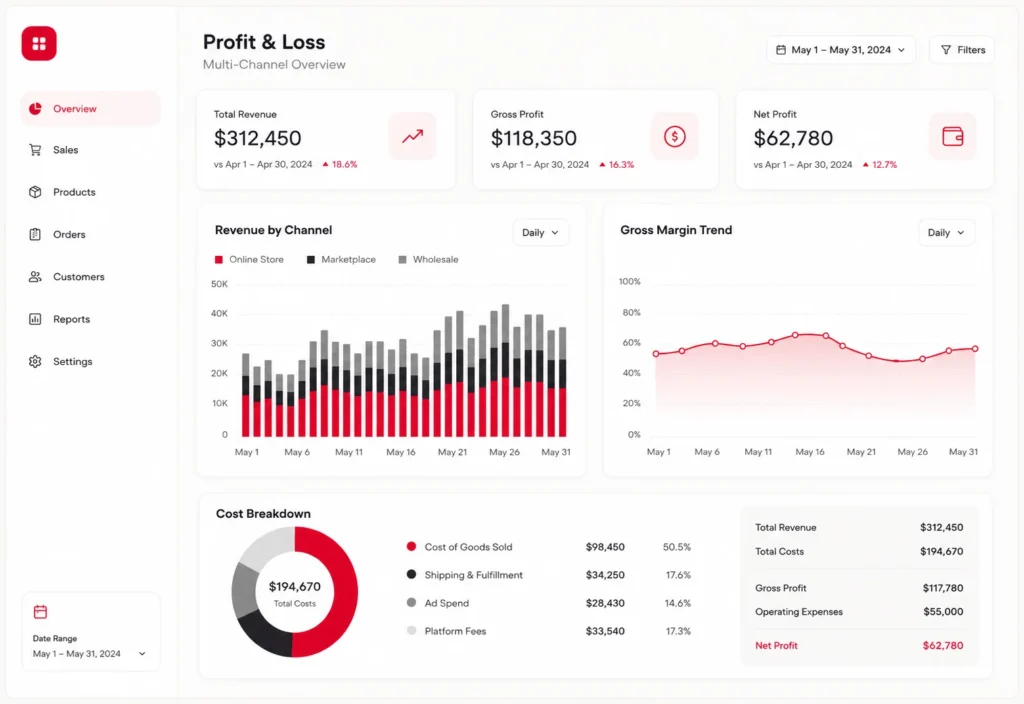
Without channel-level P&Ls, a best-selling SKU on Amazon can quietly lose money once fees, returns and storage are allocated.
The tools that run your store were never designed to work together. Without proper e-commerce CFO advisory, that creates hidden margin leakage and wrong scaling decisions.
How CPA Torrance fixes it
We rebuild the financial layer underneath your store, with a strong focus on e-commerce tax compliance and long-term clarity.
We map economic and physical nexus, register where required, and separate marketplace-facilitator sales from the direct sales you must collect on yourself.
Purchase cost, duties and inbound freight to fulfillment centers are built into unit cost, with FIFO or weighted-average methods applied consistently.
Monthly contribution margin by SKU and by channel, after fees, returns, advertising and storage, not just top-line revenue.
Cash flow and inventory purchasing forecasts that show how much stock you can fund before Q4 without straining working capital.
Core services
FAQ
We reconcile Amazon settlement reports and Shopify, PayPal and Stripe payouts line by line against bank deposits, separating fees, refunds, reimbursements and reserves so every sale is accounted for.
We map economic and physical nexus, register where required, and separate marketplace-facilitator sales from the direct sales you must collect on yourself, then monitor nexus and handle state filings on an ongoing basis.
Purchase cost, duties and inbound freight to fulfillment centers are built into unit cost, with FIFO or weighted-average methods applied consistently.
Channel and SKU-level P&Ls, inventory valuation reports and cash conversion metrics, including contribution margin after fees, returns, advertising and storage.
Yes. We’re based in Torrance, CA and support e-commerce brands in California, Texas, Florida, New York and nationwide.
Yes. Through our financial systems and advisory service we set up QuickBooks Online and connect your sales channels, payment processors and inventory data, so revenue, fees and cost of goods sold post the same way every month.
Talk to an e-commerce bookkeeping specialist today. We’ll review your channels, sales tax exposure and margins.